

Two Major Las Vegas Deals Land Within Days
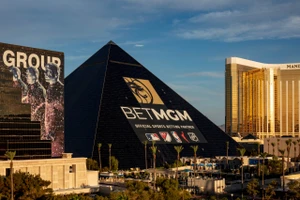
The Las Vegas casino sector has seen a rapid run of corporate activity, with Caesars Entertainment’s sale and a takeover offer for MGM Resorts announced within days of each other.
After a weaker 2025, the timing of both moves may suggest investors are taking a more optimistic view of the market, even as tourism and other headwinds persist.
The take-private of Caesars by Tilman Fertitta had been rumoured for months and was widely expected. Valued at $17.6 billion including assumed debt, Caesars had fallen to around its lowest share price levels in five years.
By contrast, an unsolicited takeover offer from MGM’s largest shareholder, Barry Diller, on Monday was less anticipated, although industry sources had long suggested Diller was waiting for the right moment to move on the Strip operator.
Details of Diller’s MGM Offer
Diller’s People Inc, formerly IAC, said it had offered $48.30 per share for the 74% of MGM stock it does not already own, valuing the company at roughly $18 billion. MGM confirmed receipt of the bid but did not set out a timetable or next steps.
Diller began investing in MGM in 2020 and has increased his stake since, citing the company’s mix of physical assets and digital growth opportunities. In a statement on Monday, he said the market continued to undervalue the strength and durability of MGM’s assets.
He also praised MGM’s management team and said there was an opportunity to support the company’s next phase of growth and help unlock its full value.
Why Caesars and MGM Have Drawn Interest
Caesars and MGM share several traits that may explain why Fertitta and Diller have moved now. Both companies’ share prices had largely underperformed over the past year, weighed down in part by challenges in Las Vegas.
Deal speculation has lifted both stocks. MGM traded below $40 for nearly two years before Diller’s offer and has since settled around $48. Caesars, which Fertitta is acquiring for $31 per share, had also spent about a year below $30 before rumours pushed it back to that level.
Both operators have broad Las Vegas footprints spanning value and premium segments. Luxury and value tiers have performed relatively well for companies such as Wynn and Red Rock, while middle and lower tiers have been more uneven, creating pressure for Caesars and MGM.
In Q1 this year, MGM posted its first YoY Las Vegas revenue gain since 2024, but the increase was only $4 million on $2.2 billion in revenue, while adjusted EBITDAR fell 8%. Caesars reported flat Las Vegas revenue and a 2% adjusted EBITDA decline.
Both operators also missed out on downstate New York casino licences last year, a market analysts view as potentially the second-largest in the US outside the Strip. MGM withdrew voluntarily at the final stage, while Caesars was denied by its community advisory committee.
Growth Segments Beyond Las Vegas
Despite Las Vegas pressures, both companies retain appealing business lines elsewhere. For Caesars, digital has long been a major growth driver, with adjusted EBITDA up 60% YoY in Q1. MGM’s Macau operations have been a standout, delivering more than $1 billion in Q1 revenue, while its upcoming Osaka resort is expected to support regional traffic.
Las Vegas Gaming Up, Tourism Still Soft
Both deals come against a mixed backdrop in Las Vegas. Gaming has started 2026 on a firmer footing, with three of the first four months positive for the Strip and the fiscal-year total running 1.2% ahead of last year’s pace. Clark County as a whole, including the Strip, downtown and locals markets, is 1.7% ahead of the same point last year.
Tourism metrics remain weaker. Visitation has declined YoY in 14 of the past 16 months, including April. Air traffic at Harry Reid International Airport has fallen YoY in each of the first four months of 2026, with the year-to-date total 5% behind last year.
Macquarie gaming analyst Chad Beynon noted the stronger gaming figures in April and Q1 but urged caution, writing that he is waiting for more positive data points and perhaps another positive quarter before taking a more constructive view on Vegas.
Even so, Diller and Fertitta appear to be moving before major construction projects and a fuller event calendar could support another growth phase. The market posted record performance from 2021 to 2024 before easing slightly in 2025. Future projects such as Hard Rock Las Vegas, Bally’s mixed-use development and the A’s baseball stadium, alongside events including the Super Bowl, F1, College Football Playoff and March Madness, are expected to add momentum to the Strip.
NBA Expansion Adds Another Angle for MGM
For MGM and Diller, the possibility of a Las Vegas NBA franchise is another factor in the equation. NBA governors voted in March to approve Las Vegas as a potential expansion site, with a final decision possible later this year.
MGM and Diller are co-owners of T-Mobile Arena with Bill Foley, owner of the NHL’s Golden Knights. The arena is currently the only venue in the city capable of hosting NBA games and already stages the NBA Cup finals. Renovations may be needed before a team moves in, but with a possible 2028 debut, T-Mobile appears the leading candidate for a home court, at least initially.
On MGM’s Q1 earnings call, CEO Bill Hornbuckle said T-Mobile is part of the expansion conversation and that MGM has been asked how it would position the arena for bidders, adding that there has been extensive interest.
Fertitta already owns the NBA’s Houston Rockets, fuelling speculation that he could pursue a Houston casino complex if Texas legalises gambling. Caesars branding could feature in any such project. The Adelson family, founders of Las Vegas Sands, own the Dallas Mavericks and have also explored casino development in Texas.
Analyst Reaction Remains Cautious
Neither transaction is complete. The Caesars agreement includes a go-shop clause through 11 July, and regulatory approvals will be needed to separate Caesars holdings from Fertitta’s Golden Nugget brand and his stake in Wynn Resorts. Diller’s MGM proposal, meanwhile, remains only an offer for now.
Despite share-price gains, analyst reaction has been measured. After the Caesars deal, Macquarie’s Beynon cited modest IRR and limited upside absent a low-probability rival bidder, cut his price target to $31 in line with the offer and downgraded the stock to neutral.
He wrote that Caesars now fits a merger-arbitrage profile, with the stock likely trading modestly below the $31 headline price due to timing and regulatory risk, with closing potentially stretching into 2027.
On MGM, Seaport’s Vitaly Umansky described the operator as a displaced stock with too much focus on Las Vegas performance and a low valuation linked to its OpCo/PropCo structure. He was more positive on MGM China but suggested Diller could divest that business along with the Japan segment if a deal proceeds.
Umansky said the buyout proposal was likely low and could potentially rise, but added that he did not expect a deal to close materially above the latest trading price. He also noted the current bid might not be acceptable to independent board members or shareholders, and maintained a neutral rating on MGM.
After topping $51 on Monday, MGM shares fell 4% to $48.36.